Ensuring a child develops a healthy, functional, and confident smile is a goal shared by parents and dental professionals. One way of achieving this is early orthodontic intervention, a proactive approach within comprehensive children’s dentistry. Dr. Charles Dennis at Abington Center for Cosmetic & Family Dentistry emphasizes that good oral health habits, starting early with proper care, pave the way for strong teeth later in life. Early orthodontic evaluation fits perfectly within this philosophy.
Early orthodontic evaluation allows dentists to identify and address potential bite, alignment, and jaw growth issues while a child is still developing, often leading to simpler and more effective treatment down the road.
The Importance of Early Orthodontic Evaluation
Identifying potential orthodontic issues at a young age is key to guiding proper dental development. While primary (baby) teeth will eventually fall out, they help hold space for the permanent teeth that follow. Premature loss or misalignment of these early teeth can lead to later crowding, impaction, or bite problems.
An initial orthodontic assessment is typically recommended around age 7. By this age, enough permanent teeth have usually erupted to allow a dentist or orthodontist to spot potential concerns such as:
- Crowding or spacing issues
- Crossbites, underbites, or overbites
- Protruding teeth
- Problems with jaw growth
At Abington Center for Cosmetic & Family Dentistry, monitoring tooth development is part of the routine care provided during childhood (ages 5-11), and Dr. Charles Dennis may recommend an early orthodontic evaluation if potential issues are observed during these regular checkups.
Modern Orthodontic Appliances for Children
If early intervention is deemed necessary, several modern appliances can be used effectively:
- Space Maintainers: If a baby tooth is lost prematurely, a space maintainer can be placed to hold that spot open, preventing adjacent teeth from drifting and ensuring room for the permanent tooth to erupt correctly.
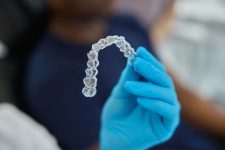
- Early Clear Aligners: In specific cases involving minor alignment issues, clear aligners (like Invisalign, which Dr. Charles Dennis may recommend for adolescents) can sometimes be adapted for younger patients needing limited correction.
- Palatal Expanders: These appliances gently widen the upper jaw over time. They are highly effective in correcting crossbites and creating needed space for crowded teeth, working best during growth phases.
Preventive Measures and Educational Strategies
Preventing orthodontic issues, or minimizing their severity often starts with fundamental care and habit awareness.
- Proper Oral Hygiene: Teaching children effective brushing and flossing techniques is paramount. Regular dental exams and cleanings are recommended every six months to monitor development and reinforce these habits.
- Dietary Choices: A balanced diet low in sugary snacks and drinks supports overall oral health and reduces the risk of decay, which can lead to premature tooth loss.
- Addressing Habits: Habits like persistent thumb sucking, pacifier use beyond an appropriate age, or tongue thrusting can negatively impact tooth alignment and jaw development. Abington Center offers habit counseling, particularly during early childhood visits (ages 1-4), to help address these concerns.
Advanced Imaging and Diagnostic Tools in Pediatric Orthodontics
Modern technology helps in accurately diagnosing and planning orthodontic treatment for children:
- Digital X-rays: These provide clear images of unerupted teeth, roots, and jawbone structure with significantly less radiation than traditional X-rays. They are essential for monitoring growth patterns and identifying issues below the surface, often utilized during childhood checkups (ages 5-11).
- 3D Imaging (CBCT): Cone Beam Computed Tomography offers detailed, three-dimensional views of the teeth, jaws, and airway, allowing for highly precise analysis, especially in more complex cases involving impactions or significant skeletal discrepancies.
- Cephalometric Analysis: Specialized X-rays and tracings help evaluate the relationship between the jaw and skull, aiding in growth prediction and effective treatment planning for bite correction and facial balance.
Contact Abington Center for Cosmetic & Family Dentistry for Children’s Dentistry in Clarks Summit, PA
Guiding your child’s dental development requires expertise and a caring approach. Abington Center for Cosmetic & Family Dentistry provides comprehensive children’s dentistry services for every stage, from first tooth checkups to adolescent care, including early orthodontic evaluations when needed. We are committed to providing early orthodontic intervention for children in the Clarks Summit area, fostering healthy habits for a lifetime smile.
Call 570 605-4907 or complete our online form today to schedule a professional and stress-free appointment for your child in Clarks Summit, PA.